
A search-led growth campaign built around technical product content, buyer-intent architecture, and relevant link acquisition.
Launching a new fishing tackle store means competing against established retailers with mature backlink profiles, broad inventories, and years of organic search visibility.
This client began with none of those advantages.
The store had a strong inventory of premium offshore and inshore fishing tackle, but the website relied on broad product categories and manufacturer-supplied descriptions. The domain had no historical rankings, established backlink profile, or meaningful branded search demand.
The Marine Marketing Agency developed an e-commerce SEO strategy built around the way experienced anglers actually research and compare fishing gear.
The store reached 35,972 monthly organic sessions by month 19. Across the full campaign reporting period, organic search generated more than $2.5 million in tracked revenue.
Campaign Snapshot
| Campaign period | March 2024 through December 2025 |
|---|---|
| Time to traffic milestone | 19 months |
| Organic traffic growth | 0 to 35,972 monthly organic sessions |
| Pages created or materially optimized | 328 total: 74 category and subcategory pages, 186 optimized product pages, and 68 educational guides |
| New referring domains | 732 |
| Tracked organic revenue | More than $2.5 million |
| Campaign investment | $309,400 |
| Revenue-to-investment ratio | More than 8.1x |
| Gross-profit-to-investment ratio | More than 2.42x |
| Gross-profit ROI | More than 142%, based on an average product margin of 30% |
Starting Position
The client entered the fishing tackle market with a new domain and a competitive product inventory covering premium offshore and inshore equipment.
The product selection was not the problem. The website did not provide search engines or buyers with enough context to understand what made the store different.
Products were grouped under broad categories such as “Reels” and “Lures.” Many product pages contained the same manufacturer descriptions used by competing retailers. High-intent commercial searches were not mapped to dedicated category or product pages.
The domain also had no established referring domains within the fishing or marine industries.
The store was effectively asking Google to rank a new domain against major retailers without providing a stronger site structure, more useful product information, or any meaningful external authority.
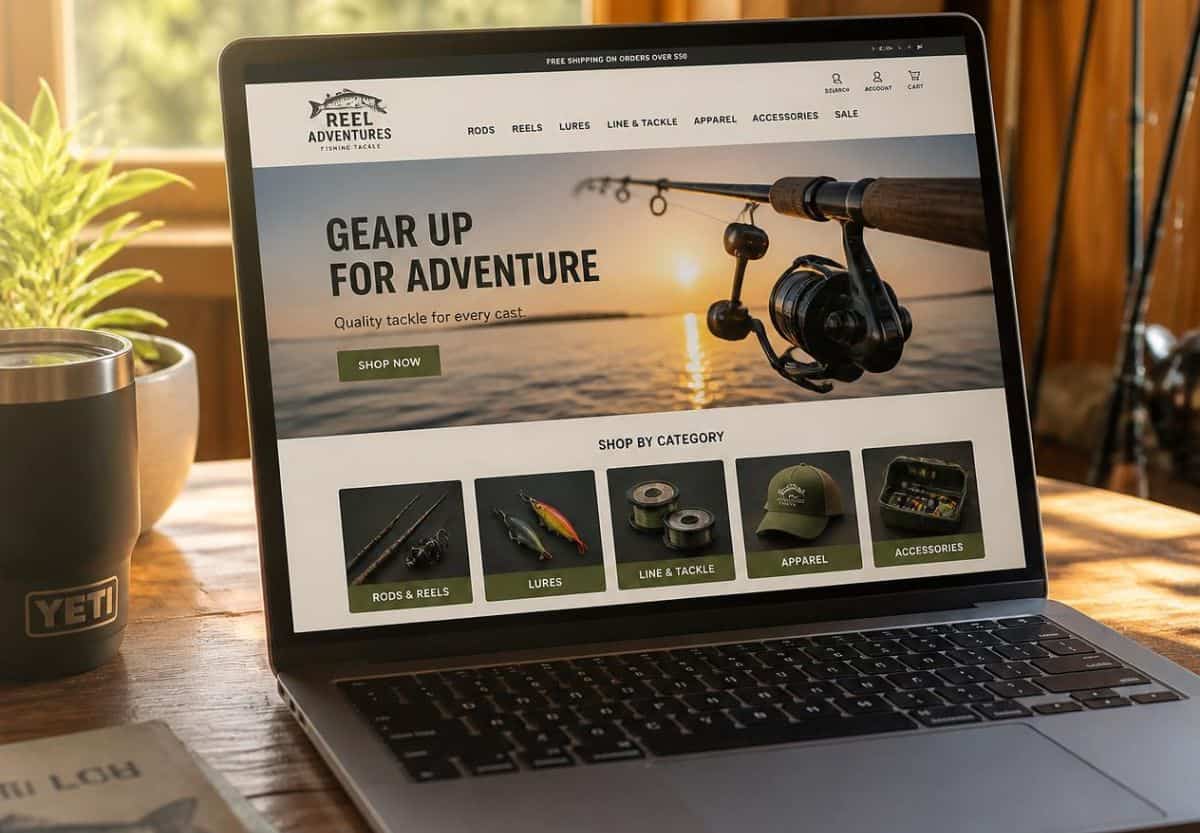
What We Found
Our initial audit identified four issues limiting organic search visibility.
Categories Were Too Broad
Large categories such as “Reels,” “Rods,” and “Lures” placed the new store in direct competition with the largest fishing retailers from the beginning.
These categories also failed to reflect how experienced anglers search.
Someone shopping for an electric deep-drop reel is not conducting the same search as someone looking for a lightweight inshore spinning reel. Both products may technically belong under “Reels,” but they serve different species, techniques, environments, and budgets.
The website architecture did not account for those differences.
Product Pages Lacked Unique Information
The store relied heavily on manufacturer-supplied product descriptions.
Those descriptions were technically accurate, but they also appeared across numerous competing websites. They gave search engines little reason to prefer the client’s product pages and gave buyers limited help evaluating which product was right for a specific application.
Commercial Searches Were Disconnected From Landing Pages
The store carried products that matched highly specific commercial searches, but it did not have pages designed to satisfy those searches.
Potential customers were searching by:
Target species
Fishing technique
Product compatibility
Water depth
Trolling speed
Line capacity
Offshore or inshore use
Equipment type
The store’s existing category structure did not align with those buying patterns.
The Domain Had No Relevant Link Profile
As a new website, the store had no established links or brand mentions within the fishing and marine industries.
Without relevant referring domains, the site lacked the competitive authority needed to rank against retailers that had spent years earning links, mentions, and organic visibility.
What We Changed
Broad fishing tackle keywords offered substantial search volume, but pursuing them first would have delayed the store’s ability to generate qualified organic sales.
We started with narrower commercial searches that closely matched the store’s inventory. The strategy combined site architecture, category development, product-page optimization, educational content, internal linking, and sustained link acquisition.
Site Architecture and Category Development
The original category structure grouped products according to basic inventory types.
We rebuilt the taxonomy around the characteristics anglers use when choosing equipment:
- Product type
- Target species
- Fishing technique
- Offshore or inshore environment
- Equipment compatibility
- Intended application
This created more direct paths between a specific search and the products capable of satisfying it.
Instead of relying solely on a broad category such as “Lures,” the store could support narrower categories based on the species, trolling method, speed, or water conditions involved.
The objective was not to create a separate page for every possible keyword variation. It was to identify meaningful product groups with distinct purchasing intent and enough inventory to justify dedicated category pages.
Over the course of the campaign, we created or materially optimized 74 category and subcategory pages.
Product Page Optimization
Experienced offshore anglers evaluate more than a product name and price.
Depending on the item, they may compare:
Drag capacity
Line capacity
Corrosion resistance
Hook strength
Rigging compatibility
Gear ratio
Construction materials
Intended species
Recommended fishing technique
Conditions the product was designed to handle
We rewrote and expanded 186 product pages using technical specifications, rigging recommendations, compatibility details, and specific use cases.
The manufacturer data remained available where it was useful, but it was no longer the entire product description.
This gave buyers more information to make a purchasing decision and differentiated the store from competitors publishing the same manufacturer feed.
Educational Content
Commercial pages were supported by 68 educational guides addressing questions anglers ask before selecting equipment.
These guides helped potential customers understand the differences between products, techniques, and fishing environments. They also created internal-linking opportunities to relevant product and category pages.
The educational content was not developed simply to increase website traffic. Each topic had to support the store’s inventory and connect to a realistic purchase path.
Link Acquisition
We executed a sustained link-building campaign focused on building visibility within the fishing, boating, marine, outdoor recreation, and relevant regional markets.
The campaign secured links and brand mentions from fishing blogs, marine publications, regional websites, and other relevant sources.
By the end of the reporting period, the domain had acquired 732 new referring domains.
The goal was not simply to increase the number of backlinks reported by an SEO tool. The campaign was designed to establish relevant authority around the store, its product categories, and the fishing markets it served.
Growth Timeline
Months 1 Through 6
The first six months focused on the site’s foundation.
We rebuilt the category structure, mapped commercial searches to appropriate landing pages, began optimizing priority product pages, and started acquiring relevant links.
Organic growth was gradual during this stage as search engines crawled the revised architecture and began evaluating the new category and product pages.
Months 7 Through 12
During the second phase, we increased the production of educational guides, expanded product-page optimization, and maintained consistent link acquisition.
The store began earning first-page visibility for specific terminal tackle, reel, rod, and lure searches.
Because these searches were closely aligned with the available inventory, the growth began producing transactions rather than informational traffic alone.
Months 13 Through 19
The strongest growth occurred as the content and link-building work began compounding.
Category pages started competing for higher-volume commercial searches that had previously been dominated by established fishing tackle retailers.
By month 19, the store reached 35,972 monthly organic sessions.
Organic search had developed from a nonexistent traffic source into a measurable revenue channel for the business.
Results
By the end of the campaign reporting period, the store had achieved:
The keyword figures are cumulative. The 4,051 top-10 rankings include the 2,991 keywords ranking in the top three positions.
Measurement Notes

Analytics platform
Organic session and revenue data were verified through Google Analytics 4.

Traffic definition
The 35,972 figure represents actual organic sessions recorded during the month-19 milestone. It is not an estimated traffic figure from Ahrefs, Semrush, or another third-party SEO platform.

Revenue attribution

Revenue-to-investment calculation
The public revenue figure of more than $2.5 million divided by the $309,400 campaign investment produces a minimum revenue-to-investment ratio of 8.1x.

Gross-profit calculation
Gross profit was calculated by applying the client’s average 30% product margin to tracked organic revenue.

Gross-profit ROI

Gross-profit-to-investment ratio

Nonbranded performance
Nonbranded growth was calculated using query-level search data after searches containing the client’s brand terms were excluded.

Link measurement
The referring-domain figure represents unique domains linking to the store, rather than the total number of individual backlinks.
What This Means for Marine E-Commerce Brands
A new marine e-commerce store does not need to begin by competing for the broadest keywords in its market.
This campaign grew by matching category and product pages to the specific ways anglers research fishing tackle. The store then supported those commercial pages with technically useful content and relevant links.
For marine e-commerce websites relying on broad categories and copied manufacturer descriptions, the first opportunity is often not acquiring more traffic.
It is creating pages that deserve to rank for the searches most closely connected to a purchase.
If valuable products are currently hidden behind generic categories, request an e-commerce architecture review from The Marine Marketing Agency.